Why do we need Engineering Diplomacy?
Imagine Dhaka needs to balance flood protection and housing development, or the government must decide between investing in renewable energy versus expanding coal-based power to meet immediate needs, or how Bangladesh can develop actionable capabilities in this era of AI and Cybersecurity. As an example, consider the Ganges River, where Bangladesh and India must negotiate water-sharing agreements that affect agriculture, drinking water, and regional stability. These are the challenges Engineering Diplomacy seeks to address.
How do we address these challenges? Most people would say, ‘It depends.’ And they’re right—because every decision is shaped by values, trade-offs, and consequences
From the choice between coal and renewable energy or how to allocate resources for flooding or homelessness; every decision involves trade-offs. These decisions aren't just technical—they're human. Each of these choices are rooted in values and worldviews with short and long-term consequences.
And that's where Engineering Diplomacycomes in.
What is Engineering Diplomacy?
Engineering Diplomacy isn’t just about solving technical problems or international negotiations. It’s a way to approach complex challenges by bringing together technical expertise, human conditions, and strategic thinking.
Engineering Diplomacy is a negotiated method of problem-solving to achieve desirable outcomes.
To understand and address a problem, start with these questions: Does it cross boundaries? Is it simple, complicated, or complex ? What are its causes and conditions? And how can we synthesize scientific and social factsto create solutions that are likely to work?
Many Faces of an Engineer-Diplomat
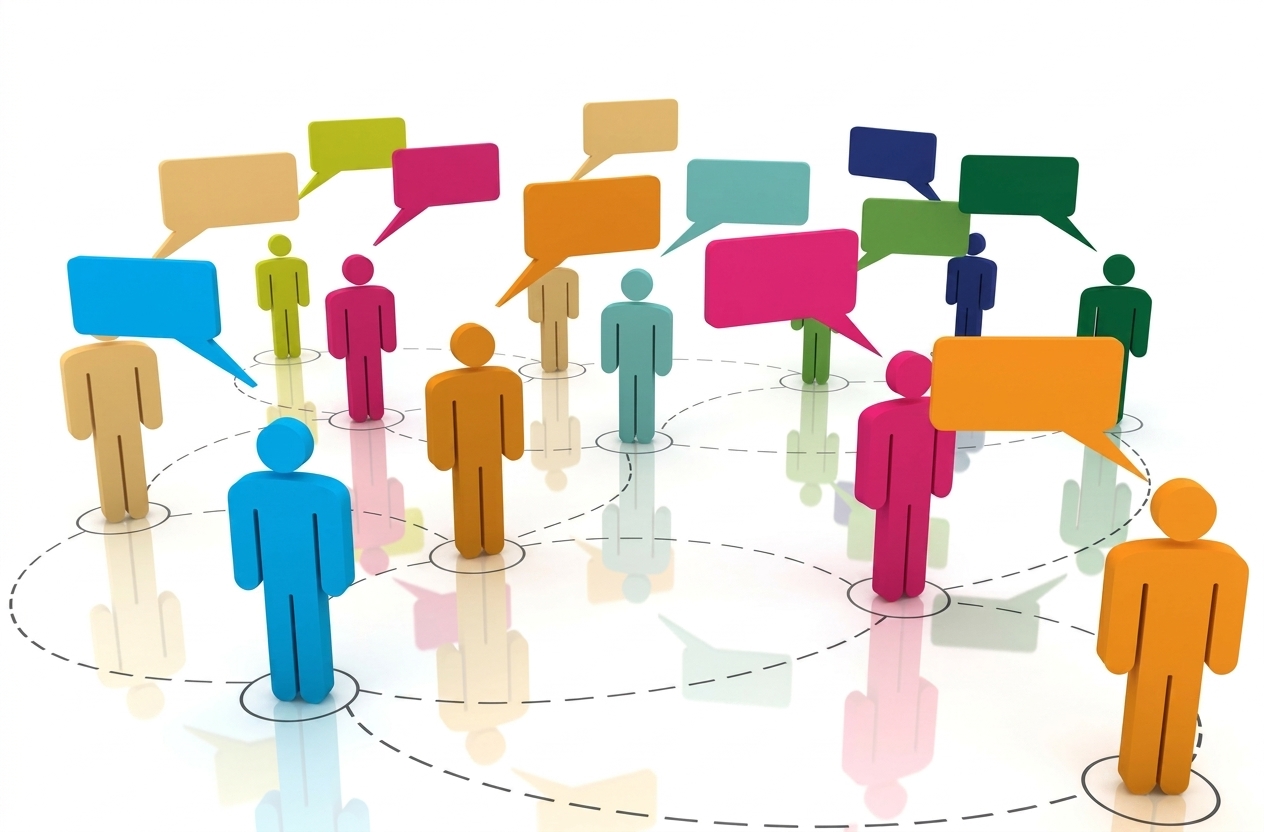
An Engineer-Diplomat is a problem-solver who bridges science, policy, and society to address complex global challenges. They combine the analytical precision of an engineer, the ethical responsibility of a humanist, and the strategic acumen of a politician to negotiate and implement technically sound, politically feasible, and socially acceptable solutions.
With this mindset, they synthesize diverse perspectives, balancing facts with values and pragmatism with ideals. Whether addressing personal choices, civic challenges, or global crises, the Engineer-Diplomat bridges different world views to create desirable outcomes.
Here is how they do it.
Let me start with a real story from Turkey's Ilisu Dam project.
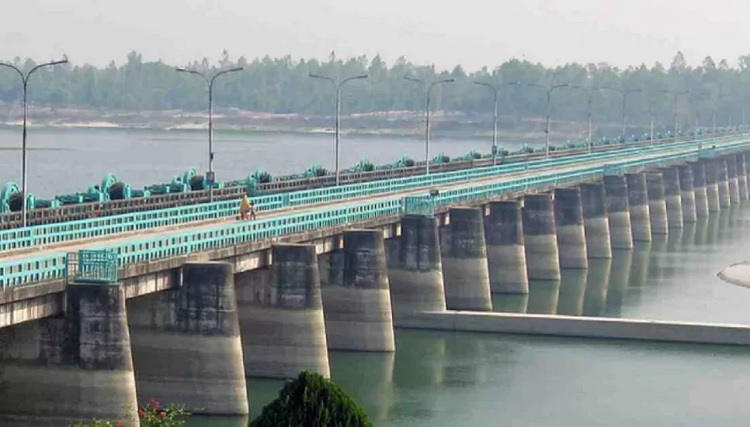
When engineers designed this massive hydroelectric dam, they saw it purely as a technical challenge: generate power, manage water resources, boost the economy. On paper, the engineering was sound. But they hadn't accounted for the human element - the displacement of communities, the loss of ancient heritage at Hasankeyf, and the ripple effects on neighboring countries sharing the Tigris River. This is exactly where Engineering Diplomacy becomes crucial.
Engineering Diplomacy emerges when technical solutions alone can't solve our problems. It starts with the technical fundamentals: understanding the science and engineering. But it doesn’t stop there. It also considers the human dimension—cultural values, social impacts, and community needs—and the strategic dimension: navigating competing interests and building consensus.
Let's explore Engineering Diplomacy in action through three real-world scenarios:
1. The Individual-Level Engineering Diplomacy?
How does an Engineer-Diplomat look like in real life?
Meet Sarah, an environmental engineer from Seattle who tackled her carbon footprint not just as a technical problem, but as a complex human challenge.
Like any good Engineer, she started with data - tracking her food waste and calculating meal carbon footprints. But here's where her diplomatic skills kicked in: she realized that the best technical solution (going vegan overnight) would crash into cultural realities (her Chinese family traditions) and daily routine (Seattle's rainy commutes).
So she got creative, blending technical knowledge with cultural sensitivity. She diplomatically introduced meat alternatives into traditional family recipes, negotiated hybrid work arrangements to cut commuting emissions, and found a sweet spot between ideal solutions and practical realities
Did everything work? Nope. Her first composting attempt was a diplomatic disaster with the neighbors (turns out nobody likes a pest invasion). But by thinking like an Engineer-Diplomat - balancing scientific solutions with human needs - she achieved a sustainable 40% cut in her carbon footprint
That's the beauty of Engineering Diplomacy at the personal level: it's not about perfect solutions, it's about finding ways to make good technical choices work in the messy reality of day-to-day life.
2. The Community-Level Engineer-Diplomat
Let us look at what happened in Bangladesh's arsenic crisis
When engineers first tackled waterborne diseases with tube wells, they nailed the technical solution but missed the human story. Then a local doctor-engineer team emerged as unexpected Engineer-Diplomats.
Instead of just marking wells as safe or unsafe, they worked with village leaders to understand how wells were woven into social status and marriage customs. They brought together health workers, community elders, and local officials to design solutions that worked with, not against, local culture. When they realized marking contaminated wells was creating social stigma, they shifted to a community-owned monitoring system.
The result? A classic Engineer-Diplomat win: combining hard science (water testing), cultural sensitivity (respecting local customs), and practical politics (engaging community leaders). Not perfect, but way better than the original top-down approach.
That's the beauty of Engineering Diplomacy at the personal level: it's not about perfect solutions, it's about finding ways to make good technical choices work in the messy reality of day-to-day life.
3. The Global-Level Engineer-Diplomat
The Montreal Protocol is perhaps the superhero story of Engineering Diplomacy. In the 1980s, we discovered a massive hole in the ozone layer. But instead of getting stuck in endless debates, Engineer-Diplomats pulled off something remarkable.
They did something radical: they got scientists, industry leaders, and politicians to actually talk to each other. Engineers developed alternative technologies that actually worked, while diplomats crafted agreements that countries would actually sign. They didn't demand immediate changes but created realistic timelines that gave developing nations a fair chance to adapt.
The coolest part? They built trust through transparency – sharing data, admitting uncertainties, and adjusting plans based on new evidence. Result? The ozone layer is healing, and we got an actionable example for how Engineer-Diplomats can tackle global problems. Not by forcing perfect solutions, but by building bridges between what's technically feasible, societally acceptable, and politically doable.
Engineer Diplomat: A Visionary and Actionable Professional
From Sarah's personal journey in Seattle to Bangladesh's community water crisis to the global triumph of the Montreal Protocol, we see Engineer-Diplomats in action at every scale. These aren't just success stories - they're rethinking and reframing for a new kind of problem-solving that our complex world desperately needs.
What ties these real-world examples together?
A mindset that goes beyond traditional engineering. At the personal level, Sarah showed how technical knowledge about carbon footprints had to dance with family traditions and daily realities. In Bangladesh, local doctor-engineer teams demonstrated that solving a water crisis meant understanding social structures as much as groundwater chemistry. And the Montreal Protocol's success came from engineering solutions that worked with diplomatic finesse.
The Engineer-Diplomat framework isn't just theoretical - it's a practical approach to navigating our messiest challenges. These stories show us that real solutions emerge when we synthesize:
- Scientific rigor to understand what's technically possible
- Cultural empathy to grasp what's socially acceptable and ethically responsible
- Political savvy to make change actually happen
An Engineer-Diplomat for the 21st century is not just a technical problem-solver, but a bridge-builder between technical solutions and human realities. Engineer-Diplomats don't just design solutions - they create the conditions for those solutions to take root and flourish in the messy real-world where we live!
Whether we're talking about personal choices, community challenges, or global crises, Engineer-Diplomats show us that lasting change happens when we treat technical and human elements as parts of the same puzzle with a principled yet pragmatic approach. It challenges us to move beyond traditional boundaries, embracing the interdisciplinary mindset required to turn ideas into actionable, sustainable outcomes.
That's not just good engineering or finesse of diplomacy - it's the future of problem-solving.
Join Us in Shaping the Future of Engineering Diplomacy
Join us to redefine how we solve problems in an increasingly complex world. Whether you’re an engineer, community leader, policymaker, or someone passionate about initiating change for desirable outcomes, you are a partner in this adventure of co-discovery!
Do you know someone like Sarah, who bridges personal traditions with sustainable living? Or community leaders like the doctor-engineer teams in Bangladesh, who aligned cultural values with technical solutions? Maybe you’ve been inspired by global efforts like the Montreal Protocol, where collaboration turned impossibilities into success stories.
Let’s rethink problem-solving together—where technical expertise meets human conditions, and solutions are created with people, not just for them. Share your stories, insights, and challenges. Let’s build a community of thinkers and doers who are shaping the future of Engineering Diplomacy.
Because the challenges of our time don’t just need more engineering—they need better Engineer-Diplomats.
Reach out, share your stories, and join us in shaping this emerging field. The future of problem-solving isn't just about what we can build—it's about how we can build it together.
Sources, Notes, and Links
Complex Problems
Simple, Complicated, and Complex
https://blog.waterdiplomacy.org/2019/12/to-address-the-problem-first-classify-the-system/
Causes and Conditions
https://www.thedailystar.net/opinion/environment/news/neither-necessary-nor-sufficient-1737712
Scientific Facts and Social Realities
Principled Pragmatism
Engineering Diplomacy Framework
Three Actionable Insights for Desirable Outcomes
The Engineering Diplomacy Framework (EDF) offers a principled, pragmatic approach to solving complex collective action problems where scientific certainty and political consensus are lacking. By synthesizing scientific facts and social narratives, diagnosing critical leverage points, and creatively reframing impasses, EDF enables the co-creation of scientifically credible, socially legitimate, and politically actionable solutions. Through three metaphorical insights—"What is 1+1?", "Find X", and "Find the 18th Camel"—EDF transforms intractable issues into creative-problem solving opportunities for desirable outcomes.
Engineering Diplomacy Framework (EDF)
Imagine deciding whether to expand irrigation networks or improve sanitation—not just for one village, but for an entire region facing growing water stress. Now scale that complexity to a country allocating scarce freshwater among urban growth, agriculture, and ecosystem preservation, all while striving to meet global development goals. Or think of a city balancing affordable housing needs against rising risks from climate-induced flooding. Or nations negotiating cyber-security norms amid accelerating digital threats.
These are not just technical puzzles or political disputes—they are collective action challenges where science, policy, and politics collide. Most responses to these challenges begin with: “It depends.” And indeed, it does—but depends on what?
For simple problems with clear cause-and-effect relationships, solutions are straightforward and outcomes predictable. But collective action problems are complex: solutions are unclear, outcomes uncertain, and consensus elusive.
"When neither the scientific certainty nor the societal consensus for action exists what we need is Engineering Diplomacy"
The EDF offers a principled yet pragmatic approach to navigate trade-offs, competing interests, uncertainties, and ambiguities. It brings together technical expertise, stakeholder engagement, and learning by doing to co-create solutions that are scientifically credible, socially legitimate, and politically actionable.
To guide action in such complexity, EDF draws upon three metaphorical insights.
Shared Understanding: What is One Plus One?
At first glance, one plus one equals two. Yet depending on context, the answer changes. A mathematician sees a universal truth; an engineer, aware of measurement uncertainty, may call it approximately two; a social scientist asks: are we adding apples, oranges, or both?
In complex, real-world problems, facts and values are intertwined, and meaning depends on context, purpose, and perspectives.
Actionable Insight: Engineering Diplomacy treats "1 + 1" not as a fixed sum but as a creative synthesis of scientific facts and social narratives. Rather than seeking singular solutions, EDF fosters shared understandings that are scientifically defensible and socially acceptable. It frames problems as a negotiation between numbers and narratives, where "truth" is actionable and rooted in multiple perspectives.
Practically, this means, for example, tackling sustainability challenges (such as SDG 6.4 for water use efficiency) by integrating diverse ways of knowing to create pathways acceptable to all stakeholders.
Strategic Intervention: Where to Put the ‘X’?
Charles Steinmetz solved a massive technical failure at General Electric by simply drawing a chalk mark of "X"—because he knew precisely where to mark. The lesson: diagnosing the problem skillfully is often more valuable than elaborate interventions.
Actionable Insight: In Engineering Diplomacy, the "X" symbolizes principled pragmatism: strategic diagnosis and minimal, high-impact interventions. EDF urges practitioners to engage early, listen deeply, diagnose precisely, and intervene strategically—especially critical in resource-constrained or politically sensitive environments.
In practice, rather than defaulting to costly infrastructure, EDF encourages pinpointing bottlenecks, misaligned incentives, or trust deficits, and designing small, meaningful adjustments for high impact.
Exploring Options: How Do We Divide 17 Camels into Halves, Thirds, and Ninths?
In the fable, a seemingly impossible division problem is solved by introducing a temporary "18th camel," making fair division simple. Reframing the problem—not forcing the old frame—unlocked a solution.
Actionable Insight: When conventional tools fall short, Engineering Diplomacy encourages the power of creative reframing. Sometimes the way forward is not to split the unsplittable but to introduce a bridging element—a temporary institution, a new metric, a reframed question—that unlocks new options.
In practice, this could mean creating flexible institutional arrangements, shared indicators, or third-party facilitators that break deadlocks and make collective action feasible without forcing premature consensus.
Engineering Diplomacy Framework in Action:
- Shared Understanding - Synthesize facts and values (1+1=?)
- Strategic Intervention - Diagnose and act strategically (where to put X)
- Exploring Options - Reframe creatively (find the 18th Camel)
- Transform problems into co-created interventions for desirable outcomes